
What makes a water bill jump without a leak.
Start with the irrigation controller, the pool autofill and the toilets. Those three account for most of the unexplained water use we get called about in North Valley homes. If they all look normal, the water meter can tell you whether the plumbing is still drawing water when everything is supposed to be off. This process applies to homes throughout Cave Creek, Carefree and North Scottsdale, including Desert Mountain, Troon North, DC Ranch, Terravita and Desert Ridge.
If water is actively spreading through the house
Close the home’s main water shutoff if you can reach it safely, stay away from wet electrical equipment, and call (602) 510-1614. Don’t wait to finish a meter test first.
A bigger bill doesn’t automatically mean a leak. Compare the gallons used — not the dollar total — against the previous billing period and the same month last year. Then look for the ordinary explanations:
- A longer billing cycle or a recent water-rate adjustment.
- More people in the house. Guests, a returning student, extra laundry and showers.
- A pool filled or topped off, or a new water feature.
- Irrigation programming. A controller set to run longer, more often, or on a seasonal schedule that rolled over.
- Unusual outdoor use. Construction, pressure washing, new plantings getting establishment water.
Irrigation deserves the closest look here. The Arizona Municipal Water Users Association makes the same point: when water use climbs without explanation, check the indoor plumbing and the outdoor irrigation, because in Arizona the yard is where most of the water goes.
If none of that explains the increase, it’s time to test the meter.
How to run a water meter leak test.
The meter measures everything entering the property through that service line. If it keeps registering water while every fixture and appliance is off, water is escaping or being used somewhere downstream of it. That is the whole test, and it costs nothing but patience.
Step 1 — turn off every intentional use of water
Make sure nobody uses water during the test. Pause faucets and showers, toilets, the dishwasher and washing machine, irrigation, pool-filling equipment, evaporative coolers, water-treatment regeneration and the ice maker if that’s practical.
Leave the home’s main shutoff open for now. The first test needs the system supplied with water.
Step 2 — find and read the meter
In most North Valley properties the meter sits in a ground-level box near the street or the property line. Lift the lid carefully so you don’t damage the utility’s equipment. Depending on the meter you’ll see a sweep hand, a digital flow reading or a small triangular leak indicator.
Photograph the display. That gives you a precise starting point instead of a remembered one.
Step 3 — watch for immediate movement
With everything off, look for movement in the sweep hand, flow icon or leak indicator. Steady movement means water is flowing right now. A motionless display is encouraging, but it doesn’t clear the house — a running toilet, an irrigation valve or a pool autofill that cycles on and off will sit still between cycles.
Step 4 — leave the water off and check again
Photograph the reading, then leave every fixture, appliance and irrigation zone off. Thirty minutes will catch a substantial continuous leak. For a more sensitive result, EPA WaterSense recommends a two-hour meter test with no water used at all.
Check the meter again at the end. If the reading changed, water passed through the meter — which means either a leak, or an automatic device such as irrigation, a pool autofill or a softener drawing water on its own schedule. A meter that doesn’t move rules out continuous flow at that moment. It does not rule out an intermittent problem.
How to check for a water leak, zone by zone.
Once the meter confirms unexpected flow, isolate the property one zone at a time. Valve layouts vary a lot, especially on larger lots, so stop if a valve is corroded, stiff or unfamiliar — breaking an old shutoff turns a controlled investigation into an active emergency.
Start with the irrigation supply
Close the irrigation supply valve and look at the meter again. If it stops, the yard is your answer. Walk the system in daylight, one zone at a time, and look for broken drip tubing, missing or damaged emitters, cracked sprinkler heads, valves that don’t close fully, damp soil between watering cycles, water surfacing near valve boxes, and one patch of landscaping growing noticeably faster than the rest.
Landscape leaks hide well here. Most systems run before sunrise when nobody’s watching, and desert soil will swallow a slow underground leak without ever producing an obvious puddle.
Isolate the pool and autofill
A pool autofill conceals water loss by continuously replacing it. Close its supply temporarily and repeat the meter check. If the meter stops, the pool system — a stuck autofill valve, a leaking supply line, an equipment leak or the shell itself — should be evaluated before anyone starts opening up the house.
Check the water softener and treatment equipment
A softener is supposed to send water to the drain during regeneration. It is not supposed to drain continuously. Listen near the unit and inspect its drain line: a control valve stuck in a regeneration or rinse cycle can consume a startling amount of water without leaving a single visible puddle.
Mineral load is why this equipment works so hard in the first place. Our guide to hard water in the North Valley explains why 15–20+ grains per gallon is so demanding on valves, fixtures and every appliance that touches water.
If the softener does appear stuck, use the manufacturer’s normal bypass procedure or arrange service. Don’t force a bypass valve that’s seized or heavily corroded.
Close the home’s main shutoff
If the meter still moves after irrigation, pool equipment and other outdoor uses are isolated, close the homeowner-accessible main shutoff serving the house. Then read the meter one more time:
- The meter stops. The leak is most likely inside the home, or on a line fed through that shutoff.
- The meter keeps moving. The problem may be in the private service line between the meter and the house, or on a branch that sits before the shutoff.
Valve arrangements differ property to property, and on acreage they can get genuinely confusing. If the result is unclear, a plumber can map the system for you. Don’t operate a utility-owned curb stop, and don’t force a valve that won’t turn.
Hidden water leak signs, room by room.
A toilet that leaks silently
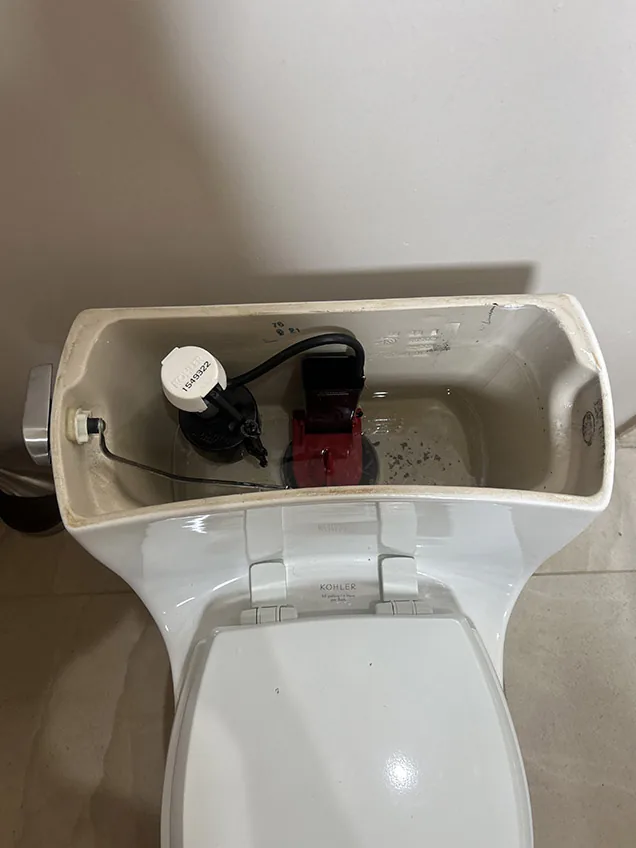
A toilet can leak from the tank into the bowl without ever making the running sound people listen for. Put a few drops of food coloring in the tank, wait about ten minutes without flushing, and look in the bowl. If color has appeared, water is passing the flapper or flush valve. Flush right away so the dye doesn’t stain the fixture.
While the lid is off, check the overflow tube. Water should not be running into it continuously. If it is, the fill valve is either set too high or no longer closing properly. A monthly look beneath sinks and around toilets catches most of these early — see our plumbing maintenance checklist.
Irrigation valves and buried drip lines
A cracked drip line can release water under gravel where you will never see it, and a valve that doesn’t seat fully will feed a zone long after its programmed cycle ends. Watch for areas that stay wet between watering days, low pressure in one zone, or plants in one spot outgrowing everything around them.
Pool autofill equipment
When an autofill is working as designed, the pool level looks perfectly normal even while water is being lost. That is precisely why this one is so easy to miss. Isolating the autofill temporarily is what separates ordinary pool use from an actual problem.
Water-softener drain flow
Drain flow during regeneration is expected. Continuous flow outside the programmed cycle is not. Check the display, the regeneration schedule and the drain line. If the unit is stuck in a cycle, bypassing it will stop the water loss until it can be serviced — using the manufacturer’s normal procedure, not force.
Water heater connections and the tank
Inspect the connections above the heater, the drain valve, the temperature-and-pressure relief discharge pipe and the floor around the tank. A leaking valve or connection is usually repairable. Water coming through the tank body means internal corrosion has broken through, and that one ends in replacement.
If water is pooling around the heater, close its cold-water supply, and shut off gas or power only if you can do it safely. Our guide to how long a water heater lasts in Arizona walks through the other warning signs that separate a repairable part from a failing tank.
A concealed pipe or service-line leak
Leaks under slabs, behind walls or along a long private service line can run for months with very little to show for it. The signs worth taking seriously:
- A meter that moves with every known water use off
- The sound of running water when no fixture is on
- A warm patch on the floor
- Damp drywall, baseboards or cabinetry, or a musty smell
- A soft or persistently wet area outdoors
- A sudden drop in water pressure
- Unexplained cracking near an area that stays wet
One symptom on its own proves nothing. Several of them together, with confirmed meter movement, is strong evidence. If weak flow is the main thing you’ve noticed, our guide to common causes of low water pressure covers what else to rule out.
What the speed of the meter tells you.
A fast-moving meter usually points to a large continuous flow — a broken supply line, a stuck toilet valve, an irrigation failure or a pool-fill problem. Very slow movement suggests a small fixture leak, an underground seep or an automatic device drawing water. Slow still adds up: a leak measured in drips per minute becomes real gallons over a full billing cycle.
No movement during a short test doesn’t clear the property. Intermittent leaks only show themselves when irrigation runs, a toilet cycles, a softener regenerates or an autofill activates. If your utility publishes hourly water-use data, compare the timing of the unexplained use against those schedules — consistent overnight use when the house should be asleep is about as useful as diagnostic information gets.
When a leak becomes a plumbing emergency.
A higher bill on its own is not an emergency. Active water damage is. Close the main shutoff and call for help when:
- Water is spreading across a floor, or a ceiling or wall is bulging
- Water is near electrical equipment
- A water-heater tank is actively leaking, or a supply line has burst
- Water is surfacing rapidly through the floor or the ground
- You can’t stop continuous flow from a fixture
- The meter is spinning with everything off
Don’t enter standing water that may be in contact with wiring, outlets or appliances. If you can’t reach the shutoff safely, leave the area and call.
When to call a plumber about a high water bill.
Arrange a proper diagnosis when the meter moves with all intended water use off, when it keeps moving after the house is isolated, when you suspect a leak under the slab or behind a finished wall, when pressure has fallen without explanation, when a water heater is leaking from the tank, when dampness or odors keep coming back, when a valve can’t be operated safely, when the same fixture problem has returned, or when the property is about to sit vacant and you haven’t found the source.
Depending on the symptoms, a plumber may use isolation testing, pressure testing, acoustic listening, moisture readings or thermal imaging. No single tool is right for every leak. The point of diagnosis is to narrow the location before anyone opens a wall, a floor or a driveway.
Capstone handles plumbing repair across Cave Creek and the North Valley. We don’t guess at your price: we diagnose the problem, explain your options, and give you the price upfront before we do the work.
Whole-home leak detection and automatic shutoff.
A meter test investigates a leak that may already be running. A monitoring valve does something different — it watches flow continuously, alerts you to unusual activity and can close the main supply before a leak turns into a flood. That matters most for seasonal or second homes, properties left empty for long stretches, houses with multiple water heaters, large lots with long plumbing runs, and anyone who has been through water damage once already and would rather not repeat it.
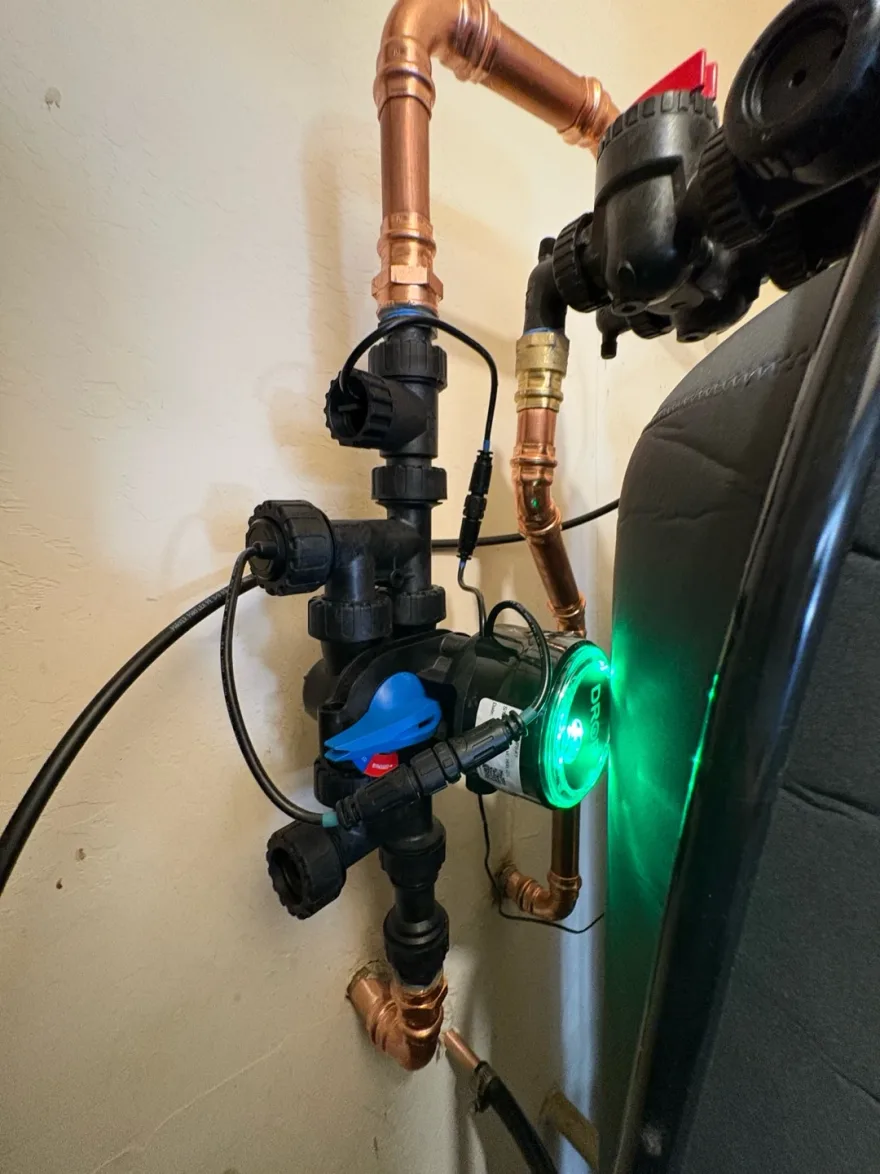
Capstone installs the DROP Home Protection Valve and paired leak detectors. The system monitors flow and pressure, sends alerts to your phone and can shut the water off on its own. Read how whole-home leak detection and automatic shutoff works before deciding whether it fits your property.
It doesn’t replace sound plumbing or a proper diagnosis. It just notices unusual water use sooner than you would, and limits how long a leak gets to run.
What to note before you call.
A few observations shorten the diagnostic visit considerably:
- When the increase first showed up, and the gallons used — not just the bill total
- Whether the meter moves with everything off
- Whether closing the irrigation supply, the pool autofill or the home’s main stops it
- Any recent irrigation or pool changes
- Any sound, dampness, odor or pressure change you’ve noticed
- Whether the property is on municipal water, a private well or hauled storage
Photographs of the meter readings and of any affected area help too.
Plumbing leak diagnosis in Cave Creek and the North Valley.
If the meter moves when everything is off, you have real evidence — not a hunch. Isolate irrigation, pool equipment, water treatment and then the house supply, in that order, and you’ll usually separate a fixture problem from an outdoor or underground line before anyone picks up a tool.
Stop testing and call if water is actively damaging the property, if a valve won’t operate safely, or if the meter keeps moving after every known water use has been isolated.
Capstone Plumbing is woman-owned, family-operated, licensed, bonded and insured under Arizona ROC #349088. To arrange leak diagnosis in Cave Creek or the North Valley, call (602) 510-1614 or request an appointment.