Why North Valley homes need a water softener.
Every gallon entering a North Valley home carries a heavy load of dissolved calcium and magnesium. It crusts white scale onto fixtures, chokes water heaters with sediment, narrows pipes, stiffens laundry and dries out skin. You've seen the evidence on every showerhead in the Valley.
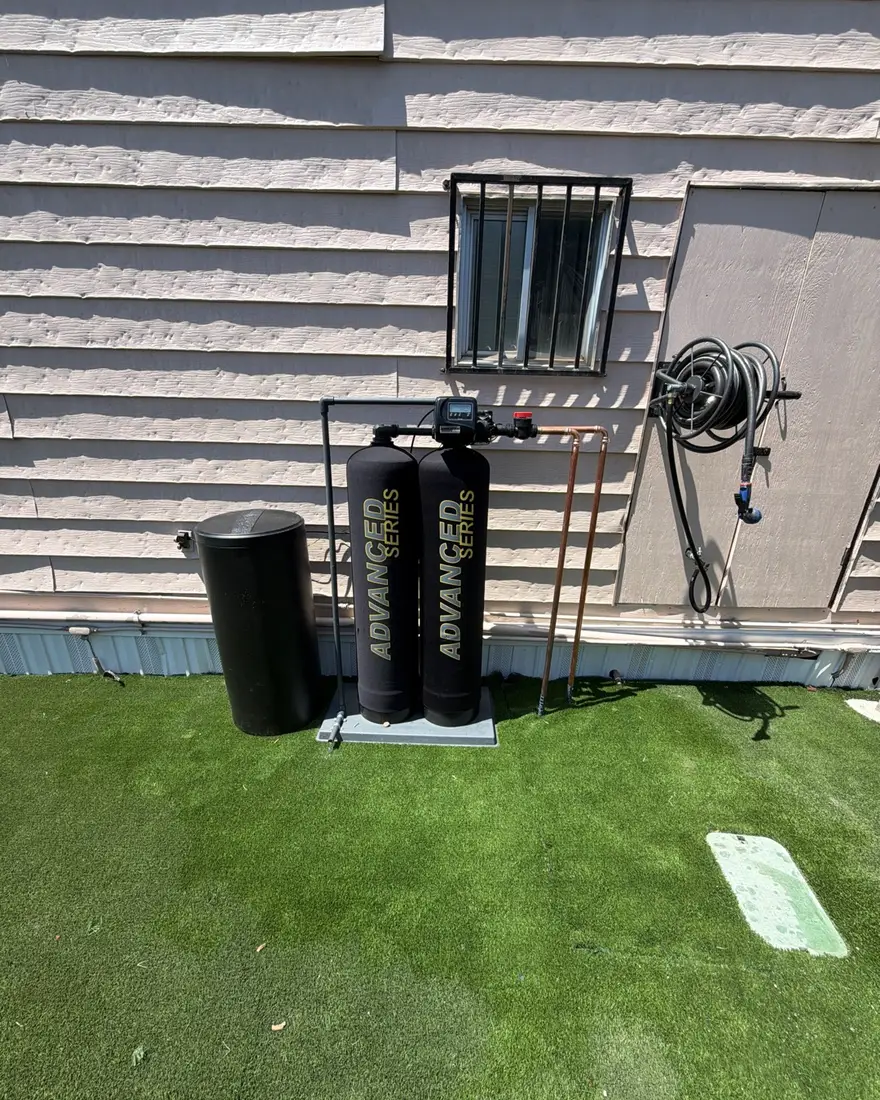
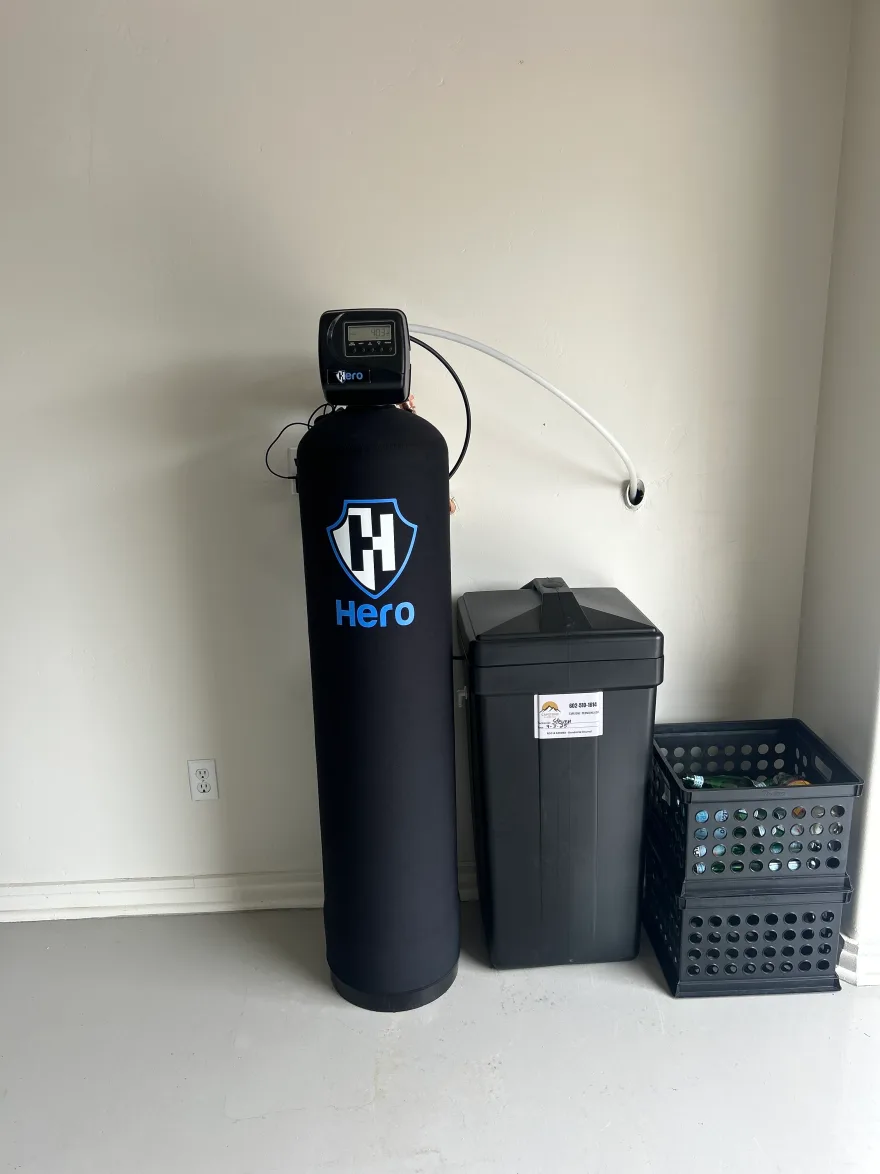
A water softener removes those minerals at the point where water enters your home. We test your actual hardness, size the system to your household's real usage — not a brochure chart — and install it clean, with a bypass valve for easy service. Outdoor installs get UV-resistant jacketing to survive the desert sun. Estimates for softener installation are free.
What softened water changes
- Your water heater lives years longer. Sediment is the #1 heater killer here.
- No more scale crust on fixtures. Or the weekly vinegar-soak ritual.
- Dishwasher and washer last longer. Scale wears out appliances from the inside.
- Softer skin, softer laundry. Minerals strip moisture and stiffen fabric.
- Soap and detergent go further. Hard minerals cancel surfactants; soft water lathers.
- Tankless heat exchangers stay protected. Often a warranty requirement in water this hard.
What hard water does to a Cave Creek home
- White crust on faucets and showerheads. That's calcium scale — building the same crust inside your pipes.
- Spotted glasses out of the dishwasher. Mineral residue no rinse aid fully beats.
- A water heater that rumbles or died early. Sediment from hard water, almost every time.
- Dry, itchy skin and dull hair. Minerals strip moisture and leave soap film that never quite rinses.
- Stiff, scratchy laundry. Minerals bind to fabric. Towels shouldn't be exfoliants.
- Soap that won't lather. The classic tell — you're paying for detergent the minerals cancel.
Softener vs conditioner vs filtration
Water treatment is full of overlapping labels and big claims. Here's the honest taxonomy, so a quote from anyone reads clearly.
True softeners: salt-based ion exchange
A real softener passes water through a resin bed that swaps calcium and magnesium ions for sodium, then periodically rinses itself clean in a regeneration cycle. It's the only technology that actually removes hardness — which is why it's the one that ends scale on fixtures, protects water heaters, and changes how showers feel. Sized correctly for our 15–20+ grain water and your household's usage, a quality unit runs 10–15 years with nothing more than salt refills.
Conditioners and "salt-free softeners"
Salt-free systems don't remove hardness — they alter how minerals crystallize so less scale sticks to surfaces. That can be worth something in mild water; in water as hard as ours, the honest framing is "scale reduction, not soft water." Your soap still won't lather like it should, and your heater still collects sediment. If a salt-free unit genuinely fits your situation — some HOAs and septic setups push that way — we'll say so, but we won't sell the label as the result. The Encore units we install belong in this category: they're conditioning systems, and we'll tell you that plainly rather than let the "salt-free softener" label do the talking.
Whole-house filtration and combo systems
Carbon filtration handles the other complaint about Valley water: chlorine taste and smell. Combo systems pair a softener with carbon media so you fix hardness and taste in one footprint. If drinking water is the priority, a reverse-osmosis tap at the kitchen sink finishes the job for pennies a gallon. We'll match the stack to what you actually care about, not sell the tallest tank.
How we size a softener
Softener capacity is rated in grains — how much hardness it can capture before it has to regenerate. Sizing one is arithmetic, not guesswork: your water's hardness (here, typically 15–20+ grains per gallon; we test yours at the quote) times the gallons your household actually uses in a day tells us the daily load, and the right unit handles about a week of that between regenerations. Undersized softeners regenerate constantly — burning salt and water and wearing themselves out — while a correctly sized unit cycles a couple of times a week on efficiency settings. That's why we ask how many people live in the house before we talk models, and why "one size fits all" quotes from big-box installs so often disappoint in water this hard.
Drinking water: where reverse osmosis comes in
A softener protects the house; it isn't designed to be the last word on drinking water. Ion exchange swaps hardness minerals for a small amount of sodium — fine for skin, laundry and appliances, but not what most people want in their coffee. The standard pairing is a whole-home softener plus a reverse osmosis unit at the kitchen sink: RO strips dissolved solids down to near zero for drinking, cooking and ice, while the softener upstream protects the RO membrane itself and doubles its service life. Two systems, each doing the job it's actually built for.
Living with a softener: the honest ownership manual
Ownership is undramatic: keep the brine tank at least a third full of salt — for most households that's a bag or two a month — and let the unit do the rest on its schedule. Regeneration runs at 2 AM by default; it sounds like a toilet running for half an hour, and it's supposed to. Twice a year, glance in the brine tank for a salt bridge — a hard crust that holds its shape while the tank empties underneath and quietly stops the softening. Every install we do includes a bypass valve, so you can take the softener offline for irrigation or troubleshooting without touching the rest of the house. If the water starts feeling hard again, spots return on the glassware, and adding salt doesn't fix it — that's a service call, not a replacement pitch.
On a well or hauled water? Test first, quote second.
North of Carefree Highway, plenty of homes — New River, Desert Hills, parts of Rio Verde — run on private wells or hauled-water storage, and those systems don't get quoted from a city water assumption. Well water can carry iron, sulfur or sediment that a standard softener isn't built to handle alone, and treating it right sometimes means pre-filtration ahead of the softener. We test the actual water first, then quote treatment that matches what's in it — because a softener fighting iron it wasn't designed for is a warranty claim on a schedule.
Our softener install process
- Test your water. We measure your actual grains-per-gallon — not the city average — so sizing is real.
- Size & quote free. Matched to household size and usage. Estimates for softener installs are free.
- Install with bypass. Plumbed at the main line with a bypass valve, copper done properly, outdoor units UV-protected.
- Dial it in. Regeneration schedule set to your usage, salt guidance included, questions answered.
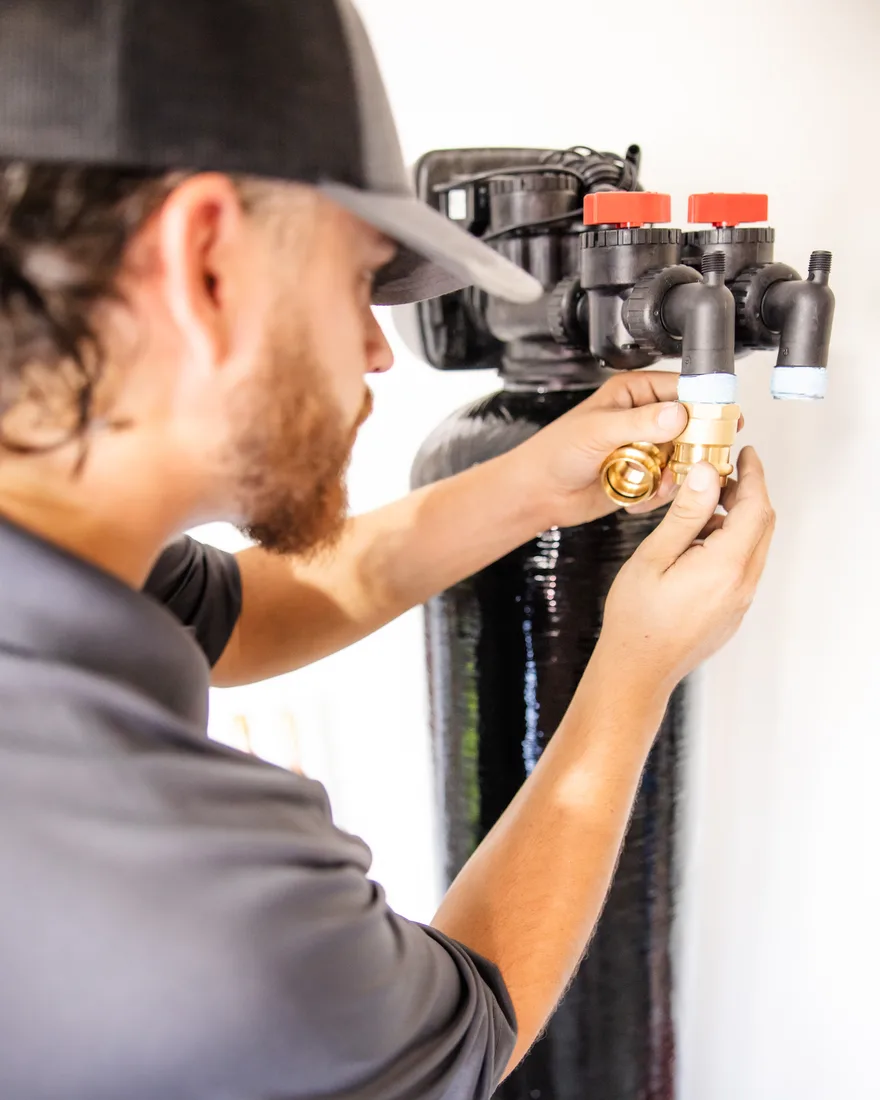
Pairing a softener with a new water heater? Smart.
The day a new water heater or tankless unit goes in is the best day to add softening — the new equipment starts life protected, and installing both in one visit saves on labor. Ask for the combined quote.
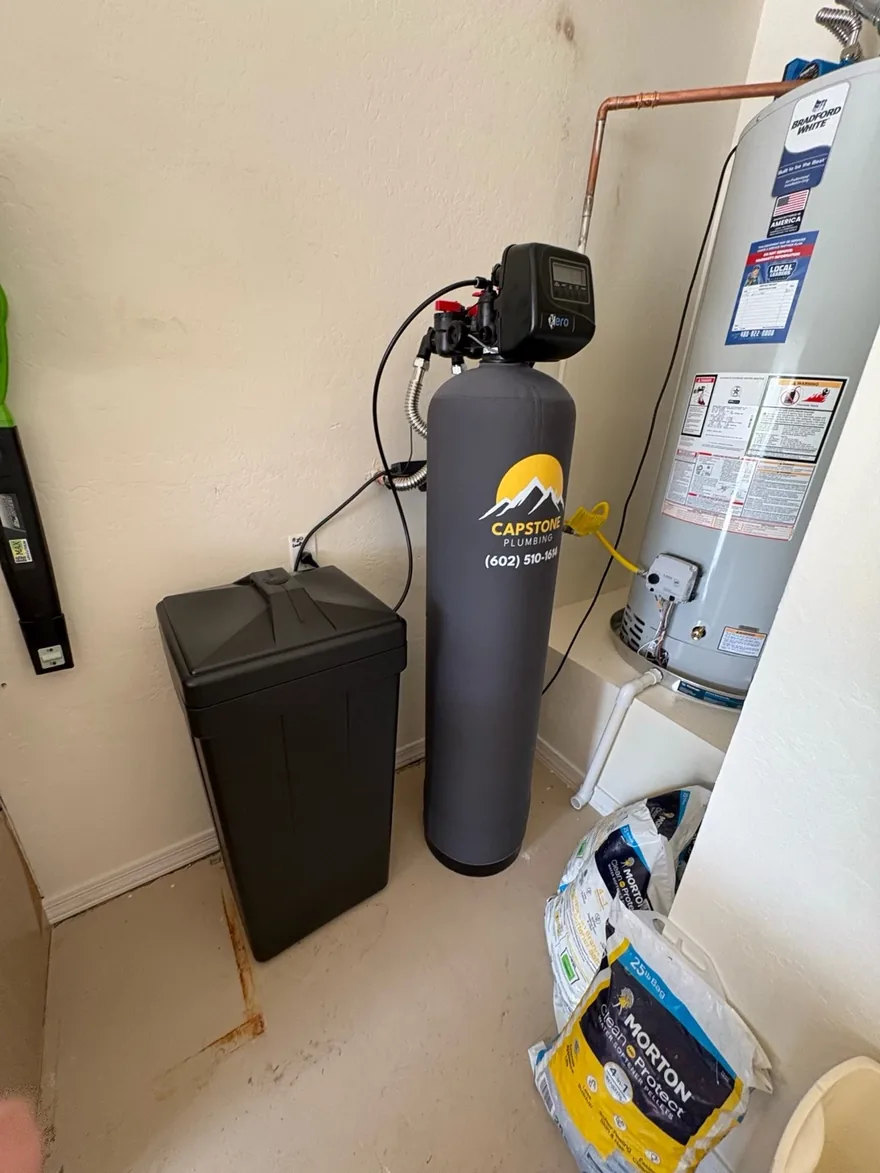
What determines water softener cost
Softener installs are priced upfront and estimates are free. These are the variables that move the number:
- Capacity. Grain rating sized to your hardness and household.
- System type. Softener only vs softener + carbon combo.
- Loop. An existing soft-water loop vs a new tie-in at the main.
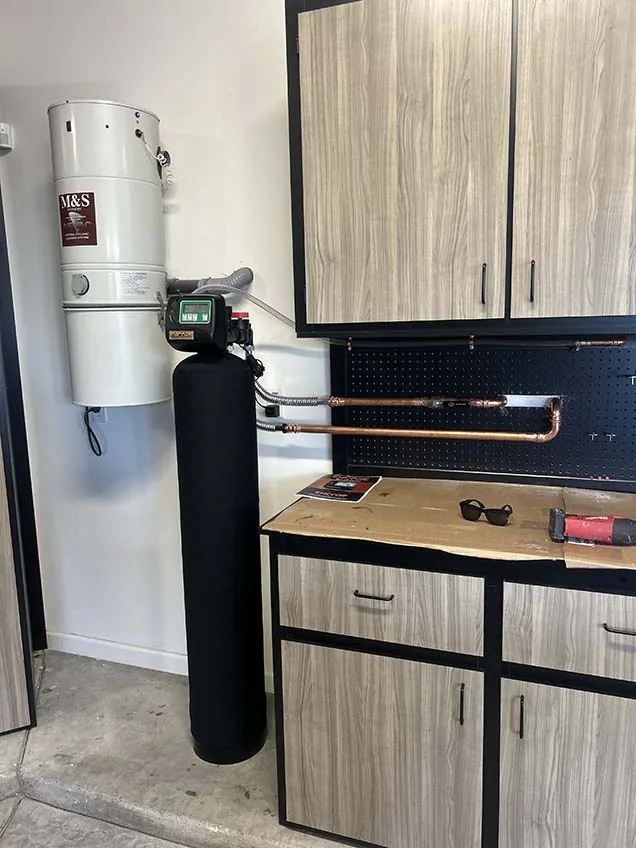
- Location. Garage wall vs outdoor install with UV jacketing.
- Drain access for the regeneration cycle.
- Haul-away of a dead old unit. Included on swap-outs.
Where we install water softeners
We test, size and install softeners across the North Valley from Cave Creek — Carefree, Scottsdale, Desert Mountain, DC Ranch, Terravita and Desert Ridge. Well-water properties across the North Valley get the same treatment with a hardness test run on your actual supply, which matters even more off the municipal system.