
Common plumbing repairs we handle.
Most plumbing problems aren't dramatic — they're a toilet that won't stop running, a faucet that drips through the night, a supply line that's started weeping under the sink. Capstone treats the small stuff with the same standard as a full repipe: a professional plumber diagnoses the actual cause, you approve the price, and the repair is backed by warranty.
We repair and install toilets and faucets, fix pipe leaks and corrosion before they become drywall projects, and run whole-home inspections that catch problems while they're still cheap. Between visits, our home plumbing maintenance checklist covers what to look at yourself. Businesses get the same treatment — we service light commercial properties across the North Valley, scheduled around your working hours where we can.
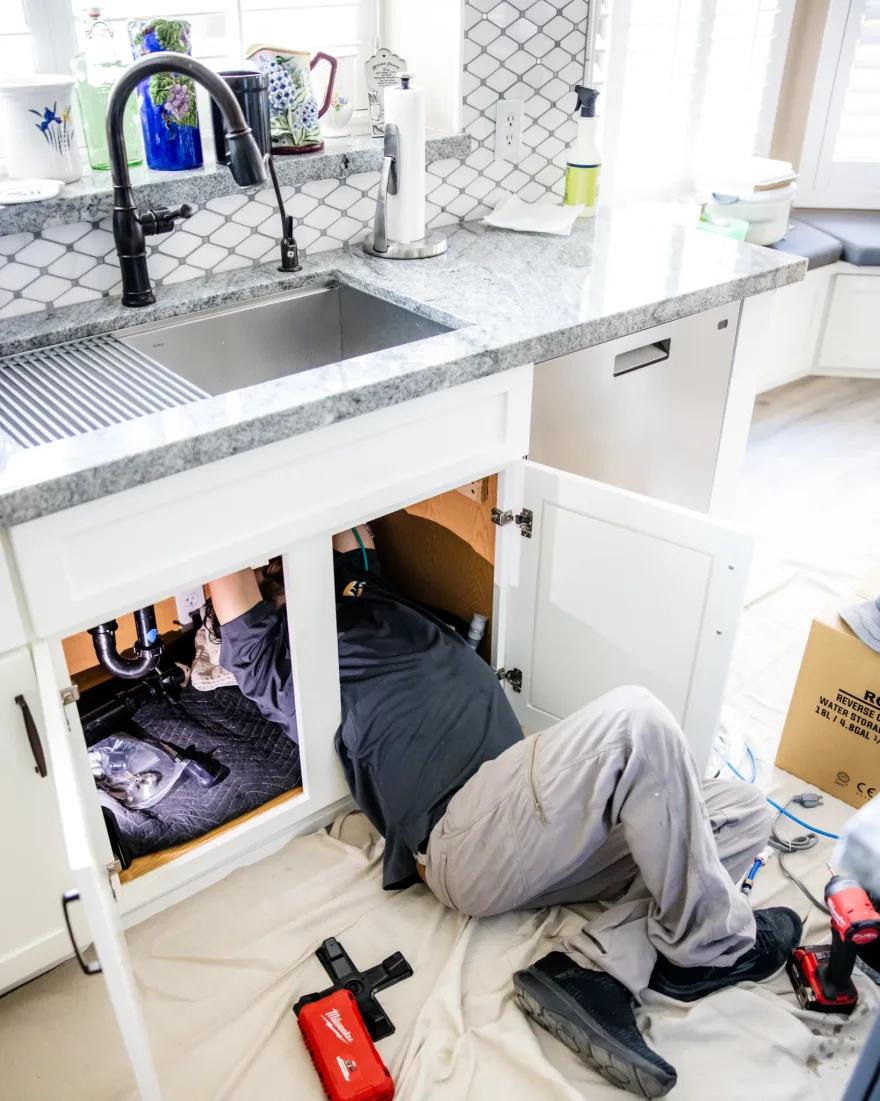
What we repair and install
- Toilet repair and installation. Fill valves, flappers, wax rings, resets and full replacements.
- Faucet repair and installation. Kitchen, bath and outdoor — cartridge swaps to full upgrades.
- Pipe repair. Leaks, corrosion and damage caught before they reach the drywall.
- Valves, supply lines and hose bibs. The small parts that cause the big water bills.
- Whole-home plumbing inspections. An annual once-over that pays for itself.
- Light commercial service. Restrooms, break rooms and fixtures, on your schedule.
Small symptoms that turn into big bills
- A toilet that runs or ghost-flushes. Wastes hundreds of gallons a day and shows up on your water bill.
- Dripping or hard-to-turn faucets. Usually a worn cartridge — a quick fix that stops the 3 a.m. drip.
- Water stains on walls or ceilings. A hidden line is leaking. Sooner is dramatically cheaper than later.
- A water bill that jumped for no reason. Classic sign of a silent leak — start with a water-meter leak test, then we'll find it before it finds your foundation.
- Low or inconsistent water pressure. Could be a failing regulator, a clogged line or mineral buildup.
- Corroded or green-crusted fittings. Hard water eats fittings from the outside too — replace before they weep.
Repairs we run every week
Toilets: from the 3 a.m. phantom flush to full replacement
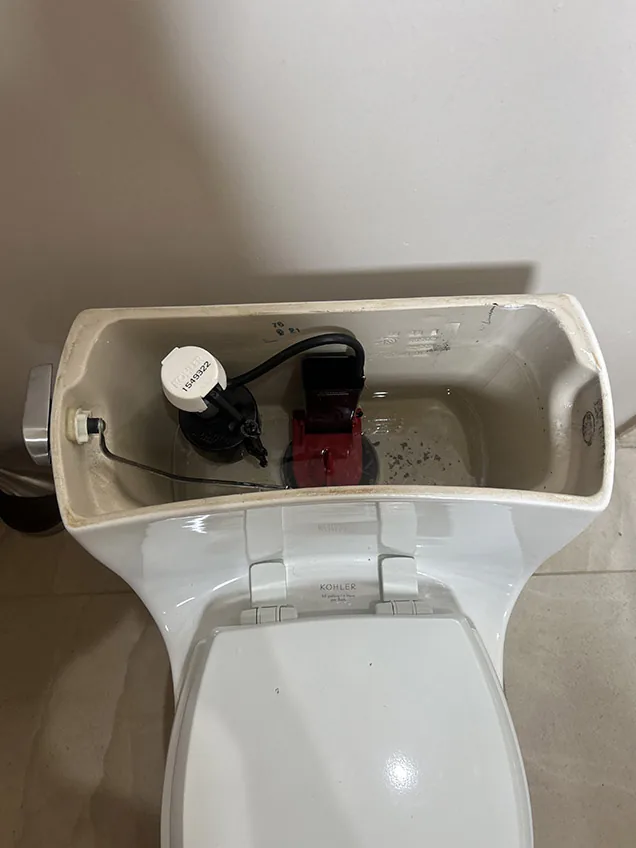
Most toilet problems come down to three cheap parts: the flapper, the fill valve and the flush valve. Hard water eats all three — minerals stiffen the flapper so it never quite seals, and that's your "ghost flushing" and your inflated water bill. We rebuild tanks with quality parts (you'll see Kohler and other name-brand hardware in our work, not bargain-bin kits), reset toilets that rock or seep at the base with new wax rings, and when a bowl is cracked or an early-generation low-flow unit clogs weekly by design, we'll say the honest thing: replacement costs less than the frustration.
Faucets and fixtures: cartridge or replace
A dripping faucet is almost always a worn cartridge, and a cartridge swap is quick, cheap and warrantied. The judgment call comes with builder-grade fixtures that have been eating hard water for a decade — sometimes the finish is pitted, the valve body is scaled, and a new mid-grade fixture outlasts a repair three times over. We'll quote both and tell you which one we'd pick. We also install customer-purchased fixtures, and we'll flag it kindly if the one you bought is going to make us both unhappy.
Pipe repair: catching leaks while they're still plumbing
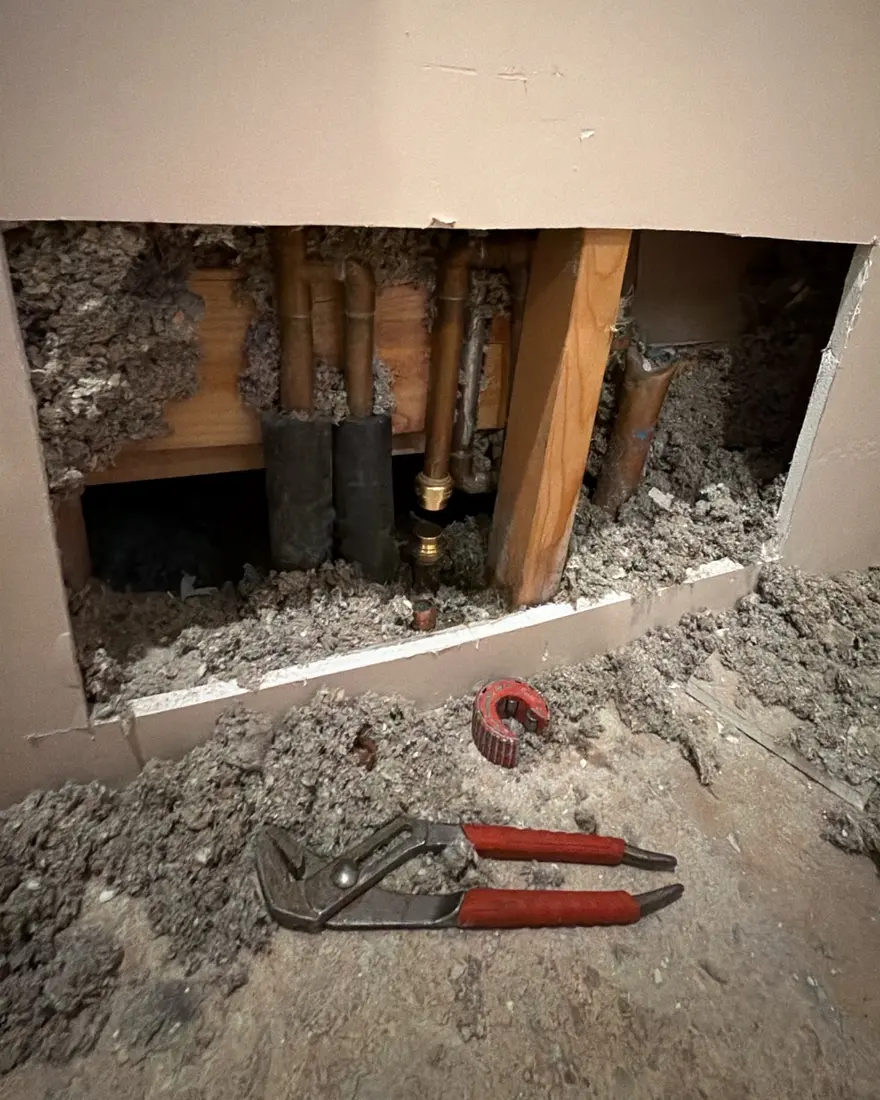
Supply lines, angle stops, hose bibs and aging copper are where North Valley leaks start. Braided supply lines and shutoff valves have a service life — the rubber and rings dry out in our climate — and a $20 part replaced on schedule beats a soaked vanity cabinet every time. We repair pinhole leaks in copper, replace corroded sections properly rather than patching over them, and check your pressure regulator while we're there, because high street pressure is the silent accelerator behind half of these failures.
When a repair becomes a repipe conversation
Most repairs are one bad part, fixed and forgotten. Some houses tell a pattern instead: a pinhole in the copper this spring, another behind the fridge by fall. Clustered leaks usually mean the pipe itself is at end of life — and some 1980s–90s Valley homes still carry polybutylene supply lines, a material that fails without warning and that insurers increasingly ask about. Our rule: we fix the leak in front of us, and if the pattern says the system is failing, we'll show you the evidence and quote the bigger job separately. Nobody gets talked into a repipe over a single drip.
Disposals, supply lines and the rest of the everyday list
Repair work is mostly the unglamorous equipment every house runs on. All of it rides the same diagnose-first, ROC-licensed standard:
- Garbage disposals. A humming disposal is usually jammed, not dead — and if the fix is the reset button or a hex-key turn, we'll tell you that on the phone for free. When the motor's genuinely gone, we replace it with a properly sized unit and fresh connections.
- Washing machine hoses and valves. Rubber hoses dry out fast in desert heat, and a burst one moves hundreds of gallons an hour. We swap them for braided stainless and replace seized shutoff valves so you can actually close them in an emergency.
- Refrigerator and ice-maker lines. Builder-grade saddle valves are a leak with a delay timer. We replace them with proper quarter-turn stops and route the line so it isn't waiting to kink.
- Hose bibs and outdoor spigots. The drip that bakes into a mineral stain on your stucco. We replace them at the wall, correctly, with vacuum breakers where code wants them.
- Water hammer. Banging pipes when a valve closes isn't "old house character" — it's pressure looking for somewhere to go. Arrestors and a pressure check usually silence it for good.
Our plumbing repair process
- Call or book. Describe the symptom — we'll tell you what it usually is and book an honest window.
- Diagnose the cause. We find the actual fault, not just the visible symptom, and explain it in plain English.
- Approve the price. You see your options and the number before we start. No hourly meter, no surprise line items.
- Fix, test & warranty. Repaired, pressure-tested, cleaned up — and backed in writing.
Active leak right now? Do this first.
Shut off your main water valve — usually near the front hose bib or at the meter box — then call (602) 510-1614. Stopping the water first is the difference between a plumbing bill and a drywall-and-flooring bill.
Why pressure regulators fail here — and what they take with them
The pressure reducing valve (PRV) where the water line enters your home is the one part protecting every other part: every supply line, every fill valve, every appliance connection lives downstream of it. Street pressure in the North Valley varies block to block and can run well past the 80 psi that code allows inside a home — the regulator's job is to hold your system in the comfortable 50–70 range.
Regulators are a wear part with a 10–15 year service life, and they rarely fail loudly. The tells show up elsewhere: pipes that bang when the washing machine valve snaps shut, supply lines and toilet fill valves that keep failing young, pressure that surges at night when neighborhood demand drops. If a repair call shows those symptoms, we put a gauge on a hose bib and test it — and when a regulator gets replaced, we check the expansion tank too, because fixing the pressure without giving thermal expansion somewhere to go just moves the problem to your water heater's relief valve. If the problem is weak flow rather than surging pressure, our guide to the causes of low water pressure in Arizona homes covers what to rule out before blaming the regulator.
What determines plumbing repair cost
We diagnose the fault first, then price it in writing and get your approval before we start. These are the levers that move a repair number, so any quote you get makes sense:
- Part vs fixture. A cartridge costs less than a new faucet; we'll tell you when each makes sense.
- Access. Under-sink is simple; inside a wall or slab is not.
- Condition of the shutoff valves feeding the repair. Seized valves get replaced, not forced.
- Bundling. Several small fixes in one visit beats three separate service calls.
- Fixture grade if replacing. Builder-grade to premium — your call, honestly advised.
Where we handle plumbing repairs
Capstone runs repair calls across the whole North Valley from Cave Creek — Carefree, Scottsdale, Desert Mountain, DC Ranch, Terravita and Desert Ridge — for homeowners and light commercial properties alike. Small fixes ride the same trucks as big jobs, so "we're already nearby" applies to your running toilet too.