
Start with a simple plumbing maintenance routine.
You do not need to take equipment apart to spot a change. A regular walk through the house can help you notice a small problem before it damages cabinets, walls or flooring.
For homeowners in Cave Creek, Carefree and North Scottsdale, this plumbing maintenance checklist provides a practical starting point. Follow your equipment manufacturer’s instructions wherever they specify a maintenance schedule or procedure.
Use the schedule below as a household reminder. Equipment-specific instructions take priority, and active leaks should be addressed immediately rather than left until the next scheduled check.
| When | What to check |
|---|---|
| Monthly | Look beneath sinks, listen for running toilets, inspect accessible appliance hoses, and review water consumption. |
| Seasonally | Observe outdoor plumbing and irrigation, check seldom-used fixtures, and prepare outdoor drains before storm season. |
| On the manufacturer’s schedule | Service water heaters, replace treatment filters, and maintain softeners and other equipment. |
| Before an extended absence | Address known leaks, identify your shutoffs, and make a property-specific plan for equipment that needs water. |
1. Locate your main water shutoff.
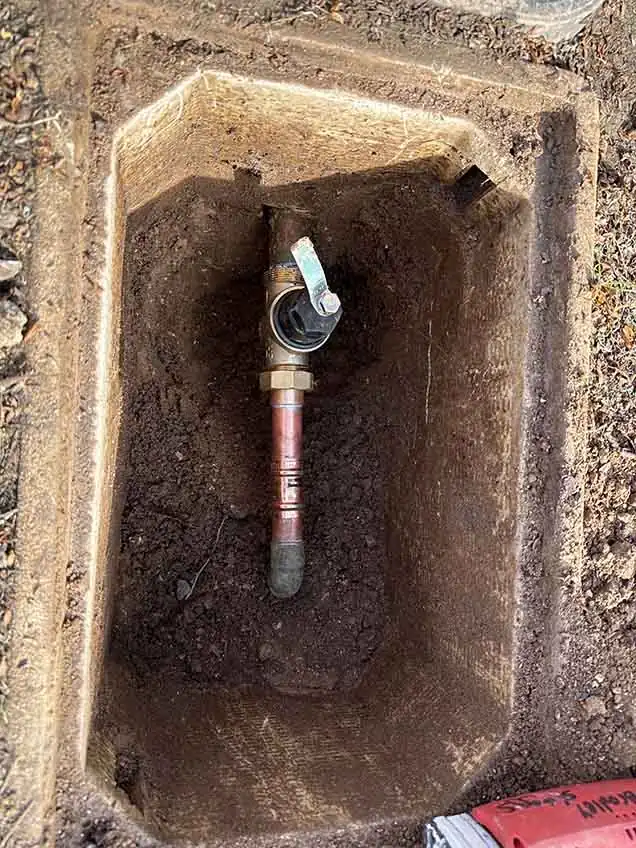
Find the homeowner-operated valve that shuts off water to the house. Make sure other adults in the household know where it is, and keep access clear.
Do not assume every valve near the meter belongs to you. If you cannot identify the correct shutoff, ask your water provider or plumber. Do not operate a utility-owned valve.
A valve that is badly corroded, leaking or difficult to turn deserves attention before an emergency. Do not force it.
Label accessible fixture shutoffs beneath sinks and behind toilets. Photos showing their locations can also help a house sitter or family member respond to a problem.
2. Check beneath sinks and around toilets.
Use a flashlight to inspect the cabinet floor, visible connections and drain piping beneath kitchen and bathroom sinks. Look for fresh moisture, staining, swelling or corrosion.
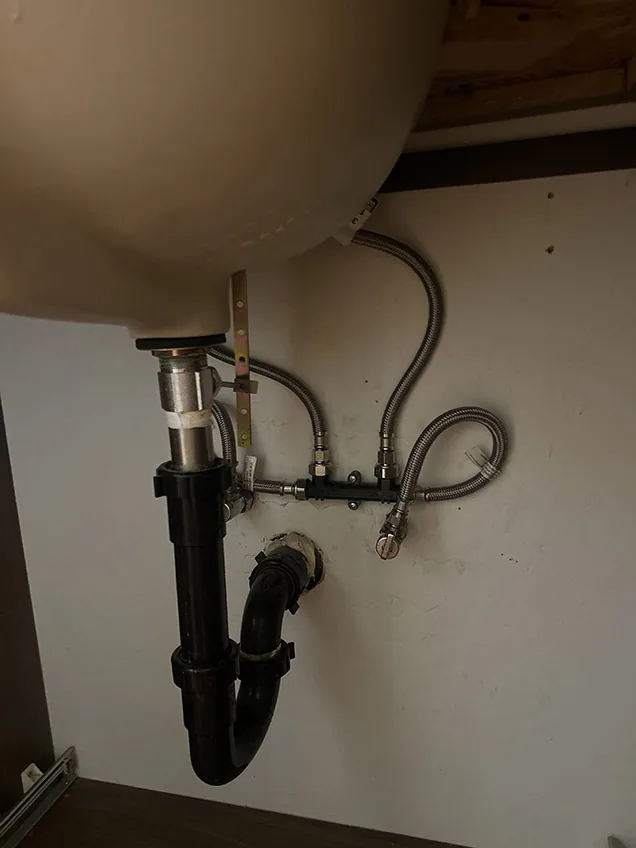
Around toilets, check for moisture at the base and supply connection. Listen for a toilet that refills when nobody has flushed.
EPA WaterSense recommends checking toilets for silent leaks at least once a year. Its home plumbing maintenance guidance and toilet leak test instructions explain a simple check: add a few drops of food coloring to the tank, wait 10 minutes without flushing, and see whether color appears in the bowl. Flush afterward to avoid staining.
If you discover unexplained consumption or suspect a concealed leak, follow our guide to checking for leaks and other causes of a high water bill. It explains how to investigate beyond the fixtures you can see.
3. Inspect accessible appliance hoses and connections.
Check accessible water connections serving the washing machine, dishwasher and refrigerator. Look for dripping, corrosion, damaged hose coverings or sharp bends.
Avoid pulling a heavy appliance out simply to inspect a connection. Moving it can strain the line or damage the floor. Leave connections you cannot safely access to a professional.
Record the installation date when hoses are replaced, and follow the appliance and hose manufacturers’ replacement guidance. There is no single replacement interval that applies to every supply-line product.
A hose that looks sound does not tell you whether its shutoff valve works. Ask about both during a plumbing visit, particularly if the valve has not been operated in years.
4. Put water heater maintenance on the calendar.
Keep the water heater’s model number, installation date and manual somewhere accessible. Use the manual to establish its inspection and maintenance schedule.
Between service visits, look for moisture around the unit and accessible connections. Note changes in hot-water availability, unusual noises or visible corrosion.
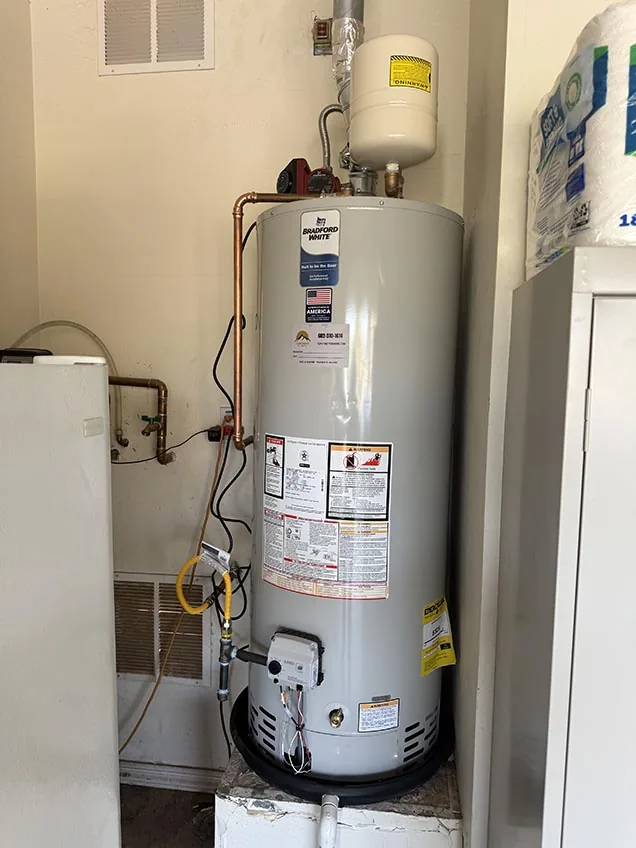
Flushing, descaling and inspecting internal components depend on the equipment type and its condition. If you do not know when your unit was last serviced, arrange professional water heater maintenance in Cave Creek and the North Valley to establish its condition and an appropriate service schedule.
For a closer look at aging equipment, read our guide to water heater lifespan and replacement warning signs in Arizona. Maintenance planning and replacement decisions should reflect the actual unit, not its age alone.
5. Maintain your water treatment equipment.
A softener, carbon filter and reverse-osmosis system perform different jobs. Their maintenance requirements are different too.
Identify each unit and keep its instructions with your household maintenance records. Follow the specified schedule for salt checks, filter changes, sanitation or professional service.
If spots return or the water changes noticeably, record when it started and whether the equipment displays an error. Adding salt or replacing a filter will not resolve every possible fault.
Our guide to hard water’s effects on North Valley plumbing and treatment options explains the differences between common systems. Use it to understand what your equipment is intended to do before deciding whether it needs service.
6. Watch for changes in drainage.
Pay attention to a sink that drains more slowly than it used to, a recurring clog, or water appearing in one fixture when another appliance drains.
Keep accessible strainers clear and remove collected hair and debris. A recurring problem deserves investigation instead of repeated temporary fixes.
If wastewater backs up into multiple fixtures, stop using water and arrange help.
Outdoor drainage needs its own seasonal attention. Use our monsoon drain preparation checklist for North Valley homes to plan checks before storms arrive.
7. Include outdoor faucets and irrigation.
Check accessible hose connections and outdoor faucets for dripping or visible damage. Look around connections as well as beneath them; a small leak may leave a stain without forming an obvious puddle.
Observe irrigation while it is running occasionally. A system scheduled before sunrise can develop a problem you never see during the day. Look for broken emitters, unexpected pooling or water spraying onto pavement.
Note whether damp areas remain between watering cycles. If a problem appears limited to irrigation or pool equipment, describe that when arranging service so the appropriate professional can assess it.
8. Make a plumbing plan before leaving home.
Before an extended absence, address known leaks and make sure someone can access the property if needed.
Decide how to manage the house water supply with the actual plumbing layout in mind. Irrigation, pool autofill, fire sprinklers and other equipment may affect that decision. Water heaters and treatment equipment also need to be managed according to their instructions.
Avoid applying a blanket “turn everything off” checklist to a system you have not identified. Ask a qualified professional to help establish a plan if you are unsure what a shutoff supplies.
Leave your contact information, the location of the homeowner’s shutoff, and instructions for reporting a problem with the person checking the house.
Keep a simple plumbing maintenance record.
A short record makes future decisions easier. Keep equipment model numbers, installation dates, service receipts and photographs of any changes in one place.
When something changes, note the affected fixture, when it started and whether it happens continuously or only during certain activities. Specific observations help a plumber investigate the problem.
Update the record after repairs so you know what was replaced, what was inspected and what still needs attention.
When to schedule a plumbing inspection in Cave Creek and the North Valley.
Arrange an inspection when you have bought a home with an unclear maintenance history, cannot identify important valves, see recurring problems, or find corrosion or moisture you cannot explain.
Ask for specific findings: what was inspected, what needs repair, what can be monitored, and which equipment is due for maintenance. Photographs and a written record make the recommendations easier to evaluate.
Capstone provides whole-home plumbing inspections and repairs in Cave Creek and the North Valley. To discuss your home’s maintenance needs, call Capstone Plumbing at (602) 510-1614 or request a plumbing maintenance appointment.