
Water heater repair, replacement & installation.
No hot water is a same-day problem, and we treat it like one. Capstone repairs minor and major water heater failures — elements, thermostats, valves, pilot and ignition issues — and when a unit is genuinely done, we'll say so and show you why, with both the repair number and the replacement number on the same sheet of paper.
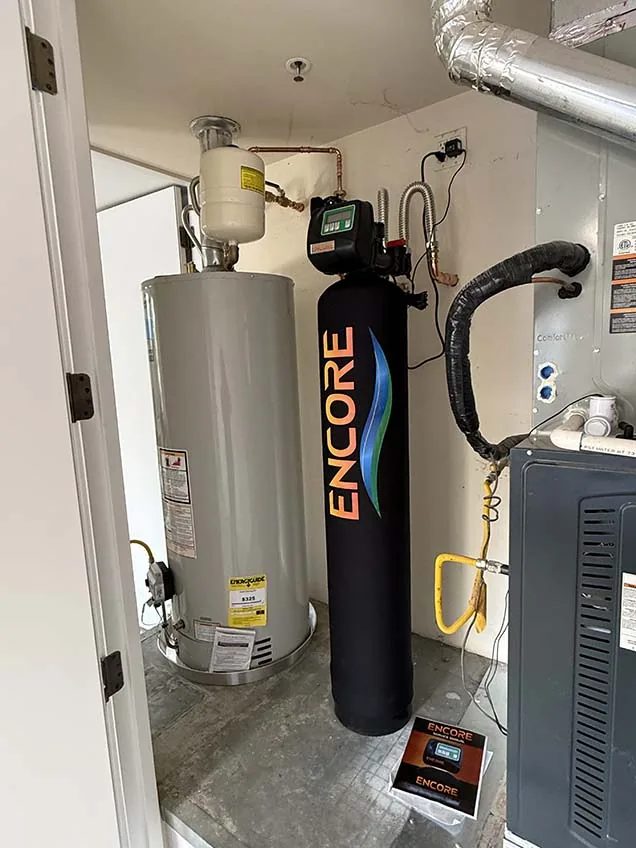
For replacements and new installations, we size the unit to your home's actual demand: square footage, number of sinks and showers, and how many appliances pull hot water. And because North Valley water is some of the hardest in the country, we'll tell you honestly how it affects the unit you're buying — and how a softener changes that math.
Every water heater visit includes
- An upfront price approved before work starts. No hourly meter, no surprise line items.
- Sediment and anode check on tank units. The two things Arizona water attacks first.
- Leak inspection at fittings and valves. The connections fail before the tank does.
- Haul-away of the old unit on replacements. No rusted tank left at your curb.
Signs your water heater is failing
- Water isn't getting hot — or runs out fast. Often a failed element, thermostat, or a tank half-full of sediment.
- Rumbling or popping sounds. Sediment boiling against the burner — the classic hard-water symptom here.
- Rusty or metallic-tasting hot water. The anode rod may be spent and the tank starting to corrode.
- Water pooling at the base. If the tank itself is leaking, it's replacement time — call before it lets go.
- Pilot light won't stay lit. Thermocouple or gas-valve trouble — a quick, fixable repair in most cases.
- The unit is 12–15+ years old. Worth a proactive look before it fails on its own schedule.
Common water heater problems we fix
The symptoms above usually trace back to a short list of parts — and most of them are repairable on the spot. These are the water heater repairs we run most often across Cave Creek and the North Valley:
- Thermocouple & pilot assembly failures (gas). The most common "no hot water" call on a gas tank: the sensor that proves the pilot is lit wears out, the gas valve shuts as a safety measure, and the pilot won't stay lit. Usually a same-visit fix.
- Heating element & thermostat failures (electric). Electric tanks heat with two elements, and the scale in our 15–20+ grain water shortens their lives. Lukewarm water or hot water that quits fast usually means one has failed — we test both and replace what's actually bad.
- Gas control valve trouble. Erratic temperature or a status light blinking a fault code points at the tank's control valve. If the tank itself is sound, the valve is replaceable — no need for a new unit.
- Leaking temperature & pressure relief valve. Sometimes the valve is spent; just as often it's doing its job because thermal expansion has nowhere to go. We check for a working expansion tank before condemning the valve — treating the symptom without the cause just burns another valve.
- Failed dip tube. The tube that carries cold inlet water to the bottom of the tank can break off and let it short-circuit straight to your taps — showers run warm for a minute, then cool. A small part that gives the whole tank its capacity back.
- Sediment buildup. Rumbling, popping, longer recovery times, higher gas bills. Caught early, a flush restores the tank; left for years in Valley water, it cooks the tank bottom and the unit's warranty period becomes its lifespan.
Repair or replace? How we decide.
Every company says they're honest about this call. Here's the actual framework our plumbers use, so you can check our reasoning against it:
- Under 8 years old + a fixable part = repair. Elements, thermostats, thermocouples, gas valves and T&P valves are all serviceable. A young tank with a bad part has plenty of life left.
- The tank itself is leaking = replace. Water weeping from the tank body means internal corrosion has broken through. No repair reverses that, and a failing tank can let go all at once — 40+ gallons onto your floor.
- 15+ years old + a major repair = replace. Spending serious money on a unit at the end of its design life is bad math. We'll show you the repair number anyway — and tell you what we'd do in our own garage.
- Third repair on the same unit = replace. Repeat failures are the tank telling you something. At that point repair money is rent, not investment.
Gas or electric — what we install and why
Most North Valley homes run gas tank heaters in the garage — typically 40 or 50 gallons — because gas recovers hot water faster and generally costs less to run at Arizona utility rates. Electric units make sense where there's no gas line, or when panel capacity and usage patterns favor them. When we quote a replacement, we quote what fits your home's supply and your household's demand, and we'll explain the trade-off in plain numbers rather than defaulting to whatever is on the truck.
Tank or tankless — when each wins
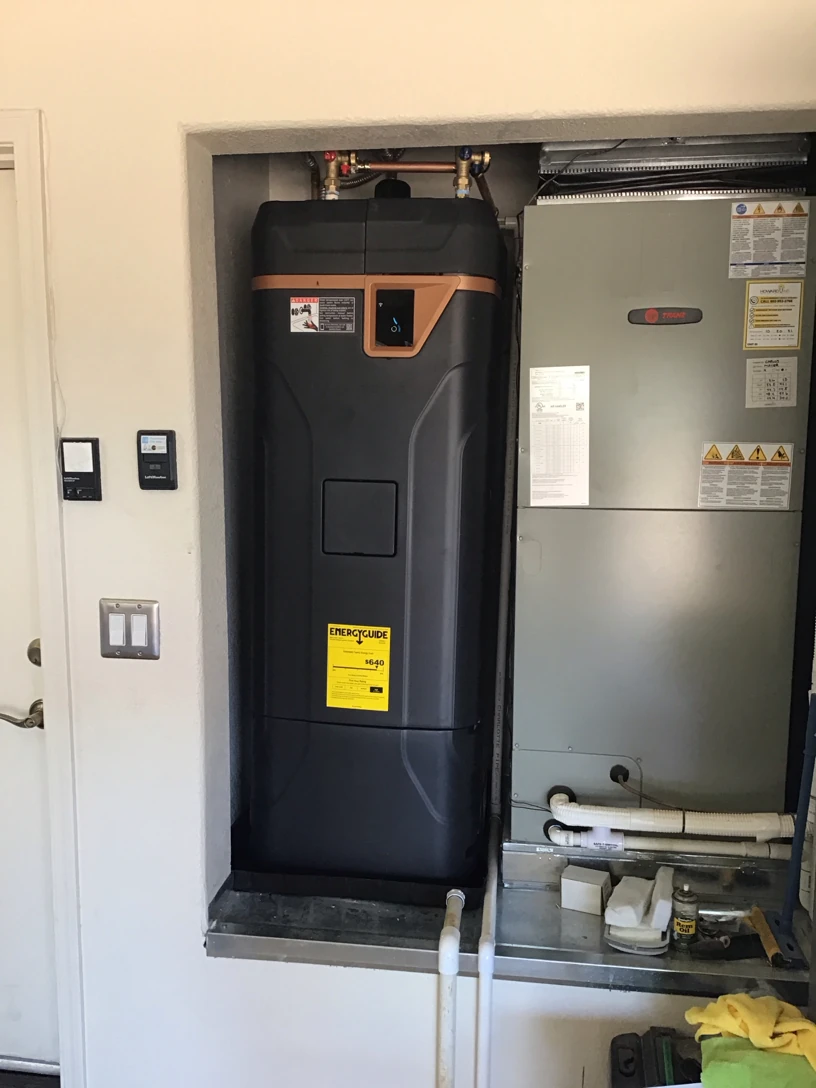
A standard tank remains the right call for most North Valley replacements: lower install cost, simple venting, and it runs fine on the gas line the house already has. Tankless earns its premium when the household actually runs out of hot water, when garage space matters, or when you're planning to stay long enough for the efficiency to pay back. The honest counterweight: tankless costs more to install, and in our hard water it needs annual descaling to keep its warranty and its flow rate. We size and install both — the full breakdown, including venting and gas-line requirements, lives on our tankless water heater page.
Brands we install and service
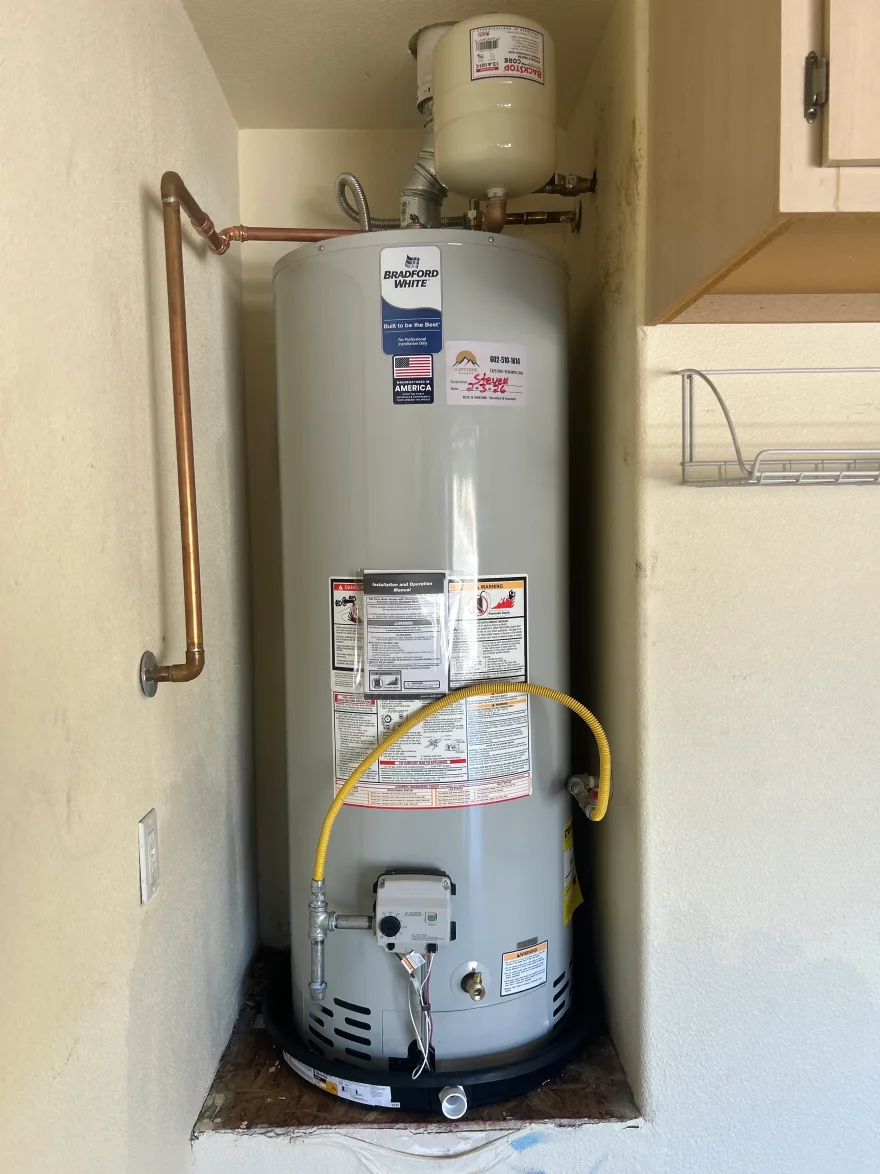
We install Bradford White and Rheem tank water heaters and Rinnai tankless units — brands chosen because parts are stocked in the Valley and their warranties get honored without a fight. For repairs, brand doesn't matter: we service every major make, including A. O. Smith, State, Whirlpool, Kenmore, Navien and the builder-grade units that came with many North Valley tract homes.
Maintenance: the cheapest years you can add to a water heater
An annual service visit does three things that matter in our hard water: it flushes the sediment that otherwise builds an insulating crust on the tank bottom and forces the burner to overwork; it checks the anode rod — the sacrificial part that corrodes so your tank doesn't, which burns through faster here than almost anywhere; and it tests the temperature & pressure relief valve, the safety device you never want to discover has seized. Homes with a water softener need all of this less often and get more years out of every unit. Our home plumbing maintenance checklist covers what to watch for around the heater between service visits.
Our water heater service process
- Call or book. Tell us the symptom. We'll give you an honest window — usually same-day.
- Diagnose, then price. We test the unit, find the actual fault, explain your options, and you approve the price before any work.
- Repair or replace. Most repairs finish same visit. Replacements are typically installed the same day too.
- Test, clean up, warranty. We verify temperature and pressure, leave the space clean, and back the work in writing.
The Arizona factor: hard water kills water heaters early.
Valley water carries 15–20+ grains of minerals per gallon. Inside a tank heater, that becomes a layer of sediment that insulates the burner from the water — the unit runs longer, costs more, and dies years early. An annual flush helps; pairing it with a water softener is the real fix.
How long a water heater lasts in North Valley water
Tank water heaters are designed for roughly 12–15 years. In Cave Creek, Scottsdale and the rest of the North Valley, an unflushed tank usually gets 8–12 — our 15–20+ grain-per-gallon water builds sediment faster than almost anywhere in the country, and a garage install that bakes through Arizona summers adds stress the design never assumed. That gap between design life and desert reality is why "how old is it?" is the first question we ask on every no-hot-water call.
You can buy the missing years back. An annual flush keeps sediment from hardening into an insulating crust; the anode rod — the sacrificial part that corrodes so the tank doesn't — gets checked at every service and replaced when it's spent; and a water softener upstream slows the whole process down. If your tank is past ten years old, the smart move is planning the replacement on your schedule — not the tank's, at 6 AM, through the ceiling of the room below it.
What determines water heater cost
We diagnose the unit first, then quote in writing before work starts. These are the factors that move the number — so any quote you get, from anyone, makes sense to you:
- Unit size and fuel type. 40 vs 50 gallon, gas vs electric.
- Code items. Expansion tank, drain pan, seismic straps and venting brought up to current code.
- Access. A garage-floor swap is simpler than an attic or interior-closet install.
- Condition of existing shutoff valves and supply lines. Corroded connections get replaced, not reused.
- Warranty length on the unit you choose. Longer-warranty tanks cost more upfront, less over a decade.
Where we service water heaters
Capstone installs and repairs water heaters across the North Valley from our shop in Cave Creek — including Carefree, Scottsdale, Desert Mountain, DC Ranch, Terravita and Desert Ridge. Being based in Cave Creek means the truck is usually already close, which is what makes same-day windows realistic instead of a marketing line.