
What a monsoon cell actually does to a drain
Desert rain does not arrive gently. A single cell can drop an inch in half an hour onto ground that absorbs almost none of it, and everything loose on the surface goes with the water. In a North Valley yard that means decomposed granite, leaf litter, and the fine caliche silt that sets like a weak cement once it settles.
Yard drains, patio drains and area drains are the first to take it on. They are designed for water, not for the sediment load a desert storm delivers. Twenty minutes of serious rain can put more grit into a drain than a full year of ordinary use, and unlike leaves, silt does not decompose or wash through. It settles in the low spots and stays.
The June checklist
Everything below is cheaper before the first storm than after it. If you only do one, do the first. The whole list belongs on your seasonal plumbing maintenance checklist.
- Clear the yard and patio drains. Pull the grates and check what is underneath. If you cannot see clean pipe, the drain is already carrying last season’s silt and has lost most of its capacity before the first cell arrives.
- Walk your washes. Know where water actually goes on your lot when it runs hard — which is often not where the landscaping suggests. Redirected flow is how water ends up against a foundation or a garage slab.
- Check the roof drainage exit points. Scuppers and downspouts that discharge onto grade should be aimed away from the house and clear of the debris that collects around them.
- Test the drains you rarely use. Guest bathrooms, casita fixtures and laundry standpipes. A drain nobody has run in months is where a slow developing problem hides.
- Note anything seasonal. If a particular drain only misbehaves when it rains, write that down. It is diagnostic information, and it points somewhere specific.
The distinction that decides the fix
An outdoor drain backing up after a storm is almost always a cleaning problem — grit and silt, cleared mechanically. An indoor drain that only backs up when it rains is a different animal: it usually means storm water or groundwater is entering the sewer lateral through a crack or an open joint. No amount of snaking fixes that, because the blockage is not the problem. The pipe is.
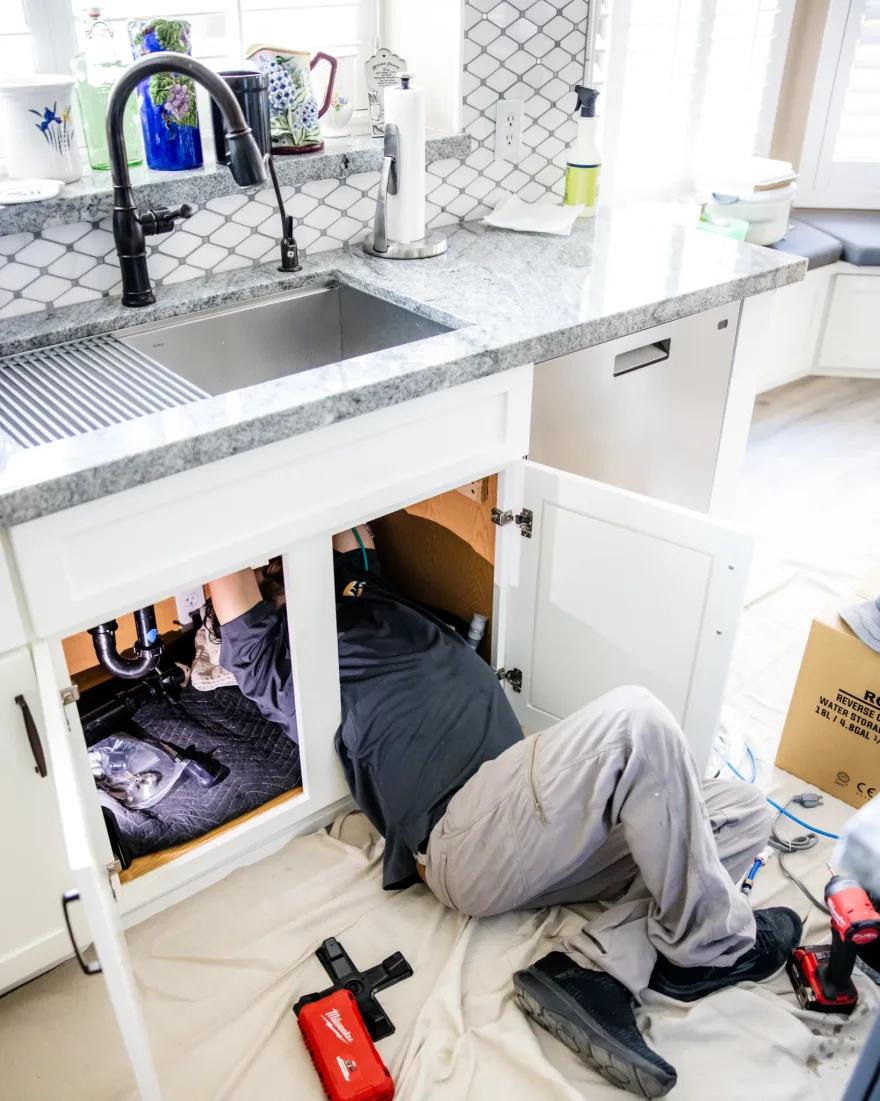
Why roots and monsoon season arrive together
Mesquites, palo verdes and pines in a desert yard are efficient at one thing above all: locating water. A sewer line with a hairline gap at a joint is the most reliable water source on the property, and roots find it. They enter thin as thread, thicken into a net inside the pipe, and catch everything that flows past.
Monsoon season makes this visible for a simple reason. The extra ground moisture drives a surge of root growth, and the additional water moving through the system exposes a restriction that was borderline all spring. A main line that backs up every August is not coincidence — it is a root intrusion that has reached the threshold where it matters.
Cutting the roots clears the line. A camera inspection afterwards shows how they got in, which is the part that determines whether you are looking at periodic maintenance or a spot repair. On the boulder and hillside lots common around Troon North and Carefree, knowing exactly where the problem sits before anyone digs is the difference between one small excavation and a landscaping project.
After the storm: reading a backup
What backs up, and in what order, tells you where the problem is before anyone opens anything.
- One fixture only. A branch-line problem. Contained, straightforward, usually quick to clear.
- Several fixtures at once. The main sewer line, downstream of everything. The lowest drain in the house fills first — usually a tub or shower.
- Toilets gurgling when the washer drains. Air displaced past a partial main-line blockage. Not a laundry problem.
- Water appearing in a fixture you did not use. Flow is backing up and finding the lowest available exit. Stop using water and call.
- Outdoor drain standing full hours after the rain stopped. Silt-packed, not clogged at a single point. Needs clearing, not poking.
Skip the bottle of drain chemicals
Caustic cleaners rarely clear the real blockage, and when they fail they sit in the pipe corroding it and waiting for whoever opens the line next. Mechanical cleaning removes the clog instead of dissolving your plumbing. If you have already poured one in, say so when you call so we can work safely.
What we actually do about it
For everyday clogs, a cable or snake clears the blockage and water carries it away — fast, inexpensive and exactly right for the majority of calls. Its honest limitation is a line packed with grease, scale or roots, where a snake punches a hole through the middle and leaves the buildup on the walls. That is the clog that “comes back” a month later.
When that is what we find, we say so before recommending anything bigger. For a recurring or main-line problem we look first — camera before shovel — so the method matches what is actually in the pipe rather than a guess. The footage is yours to keep either way, and if it shows the line is healthy, that is worth knowing too.
Yard and patio drain clearing, branch lines and main sewer lines are all priced upfront before we start. Monsoon season is our busiest stretch for exactly this work, and getting ahead of it in June is consistently cheaper than reacting in August.