
Banging water pipes can come from water hammer, loose supports, excessive pressure, or a valve that vibrates while water passes through it. Ticking during hot-water use can have a different explanation: piping expanding and rubbing against a nearby surface. The timing helps separate those possibilities.
For homeowners in Cave Creek, Carefree, and North Scottsdale, the useful first step is to notice exactly when the sound happens. That gives a plumber a starting point before anyone recommends parts or opens a wall.
Start with when the noise happens
“The pipes are loud” describes the problem. “There is one bang behind the laundry room wall whenever the washer stops filling” helps narrow it down.
Listen during ordinary use. There is no need to snap faucets shut repeatedly or keep running an appliance that is making the pipes shake.
| When you hear the noise | What it can suggest |
|---|---|
| A sharp bang immediately after water shuts off | Water hammer, sometimes made louder by loose piping |
| Rattling while a fixture is running | Pipe movement, contact with framing, or vibration from a valve |
| Chattering as the toilet refills | A fill valve or supply component that needs investigation |
| Ticking during or after hot-water use | Pipe expansion and contraction against supports or surrounding materials |
| New noises at several fixtures, with changes in flow | A pressure or supply issue that needs testing |
These are clues, not diagnoses. Sound can travel through piping and framing, so the wall where you hear it may not contain the part causing it.
Water hammer: the bang when water stops
Moving water has momentum. When a valve closes quickly, the sudden stop can send a pressure surge through the supply piping. That is water hammer.
The pressure waves caused by abruptly stopping water flow can produce a thump, a sharp bang, or noticeable vibration. Washing machines and dishwashers use automatic valves that can close quickly; a faucet can trigger the same effect.
Pay attention to the exact moment of the sound. A bang when the washer stops taking in water is a different clue from a noise during its spin cycle. Likewise, a knock when a toilet finishes refilling is different from a gurgle as the bowl empties.
That distinction keeps the investigation focused. The appliance may be operating normally while its valve closure exposes a problem in the connected plumbing.
Loose pipes can turn movement into a louder knock
Piping needs supports appropriate for its material and installation. If a support is missing, loose, or poorly positioned, a line can move and strike nearby framing when flow changes.
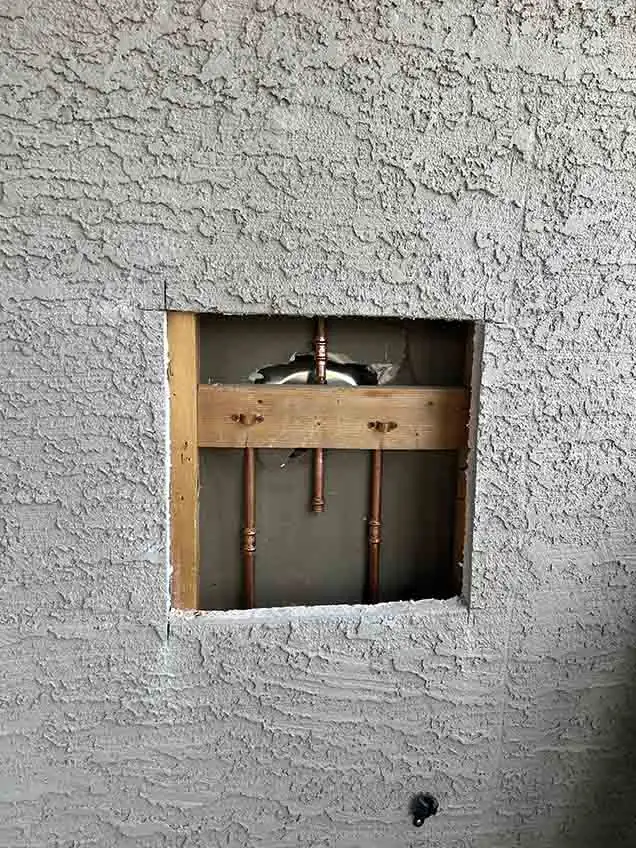
This can happen alongside water hammer. One problem creates the movement; another makes it easier to hear throughout the room.
A plumber checks accessible piping for movement and contact points, then chooses supports or cushioning suited to that installation. The goal is secure piping with the allowance for movement its material requires. Tightening every clamp as far as it will go is not a sound repair strategy.
Avoid opening drywall based only on where a knock sounds loudest. Start with what is accessible and establish whether the noise follows a particular fixture or appliance first.
Pressure and valve problems need measurements
Excessive household water pressure can contribute to noisy plumbing and put additional strain on connections. A pressure-reducing valve, where installed, controls the pressure delivered to the house. Its condition and performance matter.
Noise alone does not establish that the regulator has failed. A plumber can compare pressure with fixtures off and during water use, then investigate readings that do not fit the system. Where the measurement is taken matters too: a connection upstream of the regulator does not show the regulated pressure inside the home.
If the banging comes with low or fluctuating water pressure, mention both symptoms. That combination is more useful than either observation on its own.
Valves can also make noise while water is moving. A worn internal component or a restriction may produce vibration, humming, or chatter. A sound that continues through a toilet’s refill cycle deserves a different investigation from a single impact at shutoff.
Do not adjust the regulator or partly close the main shutoff just to see whether the noise disappears. A quieter system after restricting flow does not establish that the underlying fault has been corrected.
Ticking during hot-water use may be pipe expansion
Pipes change length slightly as their temperature changes. Where a hot-water line passes tightly through framing or rests against a support, that movement can produce ticks or clicks. The sound may continue as the pipe cools after the faucet is off.
Notice whether it happens only with hot water and whether the pace changes as the line warms. Those details help distinguish temperature-related movement from a sudden pressure surge.
The next step is checking the pipe’s clearance and support where practical. An arrestor installed for water hammer will not correct a pipe rubbing against framing as it warms.
Also note whether the sound seems concentrated at the water heater itself. A noise from the heater while it is heating needs its own assessment; it should not automatically be treated as a loose supply pipe behind a wall.
What you can check without taking anything apart
You do not need to diagnose the plumbing before calling. A few clear observations can make an intermittent noise much easier to investigate.
- Identify the trigger. Note the faucet, toilet, washing machine, dishwasher, or other equipment operating when the noise starts.
- Record the timing. Does it happen as water starts, while it runs, when it stops, or several minutes later?
- Compare hot and cold use. Record whether the sound happens with one or both during normal operation.
- Look for visible changes. Check accessible areas for moisture, staining, corrosion, or a hose contacting a cabinet. Do not pull heavy appliances out to reach plumbing.
- Mention recent work. A new appliance, replaced toilet valve, or recent plumbing repair may help explain when the symptom began.
- Make a short recording. Capture the noise and describe what was operating. A recording helps with timing, even when it cannot pinpoint the source.
Leave stiff or corroded shutoffs alone. Do not disconnect pressurized hoses, remove valve components, or reach near exposed electrical equipment to investigate a sound.
For a seasonal home or guest casita, tell the plumber whether the noise appeared after the property had been unoccupied. Include which fixtures you have used since returning rather than assuming every sound has the same cause.
How a plumber matches the repair to the cause
The repair should follow an identifiable finding. Ask what was checked, what the results showed, and why the proposed work addresses the noise you reported.
An arrestor for a confirmed pressure shock
A water hammer arrestor absorbs the sudden surge created by a closing valve. It must be selected and located for the application, following the manufacturer’s installation requirements. An existing arrestor also needs to be considered if the same noise has returned.
Adding one without checking the trigger, pipe support, and pressure can leave other causes unresolved.
Support corrections where piping moves
If accessible piping is contacting a cabinet or framing, the repair may involve correcting its support or separation from that surface. The pipe material, route, and temperature changes determine what is appropriate.
Valve work when testing identifies a fault
A vibrating toilet fill valve and a malfunctioning household pressure regulator are different repairs. Replacing the part nearest the sound is not enough; the symptoms and test results should point to the component being repaired.
Capstone provides professional pipe and valve repairs across Cave Creek and the North Valley. We diagnose the problem, explain the options, and give you the price before work starts.
When banging pipes need prompt attention
A noise by itself does not prove a pipe is about to burst. Persistent banging still deserves attention, particularly when it is new, getting louder, or accompanied by visible movement.
Arrange a plumbing visit if the noise keeps returning, several fixtures have changed behavior, or you notice moisture or staining near the affected area. If a previous repair helped only briefly, explain what was done and how long the improvement lasted.
Active leaking changes the priority
If water is spreading, close the homeowner-operated water shutoff only if you can reach and operate it safely, then call for help. Stay clear of water near electrical equipment, and do not force a damaged valve.
You do not need to finish investigating the noise before dealing with a leak.
Keep a record of changes after the repair
Once the work is complete, test the fixture or appliance that originally triggered the sound. If the problem was intermittent, ask what to watch for during the next normal cycle and what to report if it returns.
Keep the service notes with your household records. A useful record says which component was repaired, what was inspected, and whether anything needs follow-up. “Noise fixed” tells the next person much less.
Add a quick look at accessible connections and a check for changing sounds to your home plumbing maintenance checklist. You are looking for changes from normal operation, not taking the system apart on a schedule.
Get a clear answer about noisy pipes in Cave Creek
The most useful detail you can give us is simple: what was using water when the noise happened, and whether it occurred before, during, or after that use.
From there, the investigation can focus on the right fixture, piping, or pressure condition. You should understand what needs attention and why before approving a repair.
If your water pipes keep banging or knocking, call Capstone Plumbing at (602) 510-1614 or schedule a plumbing inspection. We serve Cave Creek, Carefree, North Scottsdale, and the surrounding North Valley.