
The four usual causes of a sewage smell.
A sewage smell in your bathroom usually comes from one of four places: a drain trap that has dried out, buildup inside a sink or shower drain, a failed wax ring under the toilet, or a leak in the plumbing vent system. A damaged sewer line is possible, but it is not where to start.
Where the smell is strongest and when it shows up will tell you which one you are probably dealing with. Use the table below to narrow it down, then read the section that matches.
| What you notice | Most likely cause | First step |
|---|---|---|
| Smell in a guest bath, casita, or a home that has sat empty | Dry drain trap | Pour about a quart of water into each drain |
| Smell at one sink or shower, worse when water runs | Buildup in that drain | Clean the stopper, drain opening, and sink overflow |
| Smell around the base of the toilet | Failed wax ring or toilet seal | Call a plumber; caulk will not fix it |
| Smell that keeps coming back, with gurgling drains | Vent or drain-pipe problem | Call a plumber for an inspection |
| Smell worse at night or early morning | A trap that is low or dry | Refill the traps and see if it stops |
| The water itself smells, even in a glass | Water supply or water heater, not the drain | Tell your plumber or water provider |
A dry drain trap lets sewer gas into the room.
A drain trap is the U-shaped section of pipe under every sink, tub, and shower (often called a P-trap). It holds standing water, and that water is the only barrier between your bathroom and the sewer gas in the drain line. When the water evaporates, the gas comes straight up through the drain.
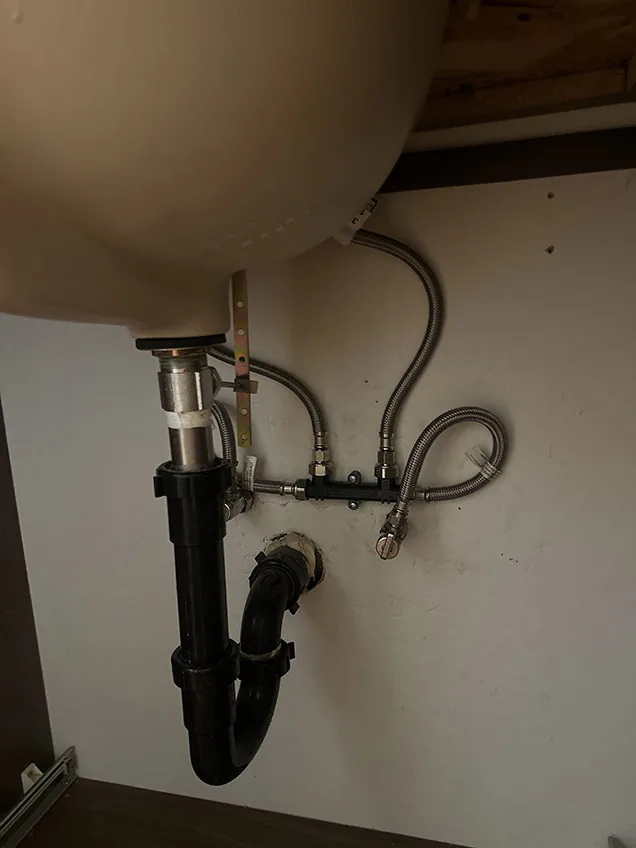
This is the first thing to check in a guest bathroom, a casita, or a home that has been empty for a while. The sink can look clean and the shower can drain normally, and neither tells you whether the trap still holds water. In Arizona’s dry heat, a trap that goes unused can lose its water faster than you might expect.
The City of Phoenix’s guidance on sewer odors (PDF) recommends pouring about a quart of water into each problem drain. That is enough to refill the trap and restore a full water seal.
Each fixture has its own trap. Running the sink does not refill the shower’s trap, and running the shower does not refill the tub’s. Do every drain in the room.
If the odor clears and stays away once the fixtures are used regularly, evaporation was the cause. If it comes back within a day or two, the trap is losing water for some other reason, and refilling it again and again only hides the problem.
Why the smell is often worse at night or in the morning
The City of Phoenix explains that the sewer system carries the most flow during peak bathroom hours: roughly 6:30 to 8:00 a.m. and 5:30 to 9:00 p.m. That heavy flow pushes gas ahead of it, and the gas escapes through the easiest path, which is often a drain with a dry trap. If your smell comes and goes on that schedule, check your traps first.
Buildup inside a drain can smell just as bad.
Not every bad bathroom smell is sewer gas coming up from the line. Hair, soap residue, and grime collect around the stopper and inside the drain, and over time they form a slimy layer that gives off a rotten-egg smell even when the trap is full of water. A bathroom sink’s overflow opening, the small hole near the rim, collects the same residue.
Signs that buildup is the cause:
- The smell is strongest at one sink or shower.
- You can see debris around the drain or stopper.
- The odor gets stronger when water runs.
- The fixture drains more slowly than it used to.
Remove and clean the stopper and any other removable parts, following the fixture manufacturer’s instructions. Never mix cleaning products, and don’t keep pouring chemicals down a drain when you don’t know the cause.
If the odor comes with persistent slow drainage or clogs that keep coming back, professional drain cleaning is the next step. A smell by itself, without slow drainage, does not mean there is a blockage.
Why does my bathroom smell like sewage after a shower?
A smell that shows up right after a shower usually points to one of two things. The first is buildup in the shower drain itself: warm water running over the hair and soap residue in the drain stirs up the odor. Cleaning the drain opening and strainer is the place to start.
The second is a venting problem. If the toilet or a nearby sink gurgles while the shower drains, the draining water may be pulling water out of another fixture’s trap. That needs a plumber, because refilling the trap will not stop it from happening again.
A failed wax ring can let odors out around the toilet.
A toilet sits on a wax ring (or, on some installations, a wax-free rubber seal) that seals it to the drain opening in the floor. When that seal fails, sewer gas escapes around the base of the toilet.
Look for a toilet that rocks, moisture around the base, or staining on the floor next to it. A failed seal does not always leave a puddle, so a dry floor does not rule it out.
Don’t rock the toilet to test it, and don’t crank down on the floor bolts. Movement can break the seal further, and overtightening can crack the porcelain.
A smell that stays around the toilet base means the seal, the flange underneath it, and the toilet mounting all need to be checked. Running a bead of caulk around the outside does not fix a failed seal underneath.
Vent or drain-pipe problems cause odors that keep coming back.
Every drain in your home is connected to vent pipes that run up inside the walls and out through the roof. The vents balance air pressure in the drain lines and carry sewer gas outside. If a vent joint loses its seal or a pipe cracks, gas leaks into the walls and into the house. Vent problems can also pull water out of traps, which brings you back to a dry-trap smell that refilling won’t fix.
Signs of a vent problem include gurgling drains, a toilet bowl water level that rises or drops on its own, and a smell that returns every time other fixtures drain. Any one of these alone doesn’t confirm a vent problem, but together they point that way.
Vent pipes run behind drywall, so a leak is usually hidden. A plumber can locate it with a smoke test, which fills the drain and vent system with harmless smoke and shows where it escapes.
There is one more cause that is common on Arizona roofs. The City of Phoenix notes that a plumbing vent placed too close to the air intake of an evaporative cooler or a central air unit can draw sewer gas back into the house. If the smell seems to come through the vents or ceiling registers when the cooler or AC is running, mention it to your plumber.
A sewer camera is not automatically the first test for a bathroom odor. The investigation should follow the symptoms: traps first, then the toilet seal, then vents and drain lines.
Is the smell coming from the drain or the water?
Sometimes the smell only appears when you turn on a faucet, so it seems like the water is to blame.
Here is a quick test from the City of Phoenix: fill a clean glass with cold tap water, carry it to another room, and smell it there. If the water in the glass has no odor, the smell is coming from the drain, not your water supply.
If the water itself smells, or the odor only shows up with hot water, tell your plumber or water provider. A hot-water-only smell often traces back to the water heater, which is a different repair from a dry trap or a dirty drain.
Is sewer gas dangerous?
Sewer gas is a mix of gases, including hydrogen sulfide, which causes the rotten-egg smell. The faint odor from a dry trap is mainly an unpleasant nuisance, but you should not get used to living with it. A smell that persists means gas is getting into your home, and the source should be found and fixed.
Open a window and run the bathroom exhaust fan while you track down the cause. If anyone in the home feels unwell, gets a headache, or feels dizzy, get them into fresh air.
A strong rotten-egg smell is not always a drain problem
Natural gas has a similar odor added to it so leaks can be detected. If you suspect a gas leak, leave the building right away without flipping switches or lighting anything, and call your gas utility or 911 from outside.
What to note before calling a plumber.
You don’t need to take anything apart to collect useful information. Write down:
- Location: Sink, shower, tub, toilet base, or the whole room.
- Timing: After being away, during use, after flushing, at night or in the morning, or all the time.
- Drainage: Normal, slow, gurgling, or backing up.
- Visible changes: Moisture, staining, or a toilet that moves.
- What helped: Whether refilling an unused drain changed the smell, and for how long.
If several fixtures are backing up at once, or wastewater is coming into the room, stop using the plumbing in that area and call for help right away.
Keeping odors from coming back in seldom-used bathrooms.
Add guest bathrooms and casitas to your regular household checks. Run water in every fixture regularly, watch for slow drainage, and track down a recurring odor instead of covering it with air freshener.
Before an extended absence, make a plan for checking the house. Whoever visits should know which drains to run and how to report moisture, odors, or drainage changes.
Our home plumbing maintenance checklist covers the broader routine, including shutoff locations, accessible connections, and what to do before you leave town.
When to schedule a bathroom plumbing inspection.
Call for an inspection when the smell comes back after you’ve refilled the traps, shows up around the toilet base, or comes with leaks, gurgling, or slow drainage.
The goal is to find the source before choosing the repair. A dry trap, a dirty drain, a failed wax ring, and a leaking vent each need a different fix, and guessing wrong costs you money without solving the smell.
Capstone Plumbing provides toilet and plumbing repairs in Cave Creek and the North Valley, including Carefree and North Scottsdale. We diagnose the problem first, explain your options, and give you an upfront price before any work begins.
To get a persistent bathroom odor tracked down, call (602) 510-1614 or request an appointment.